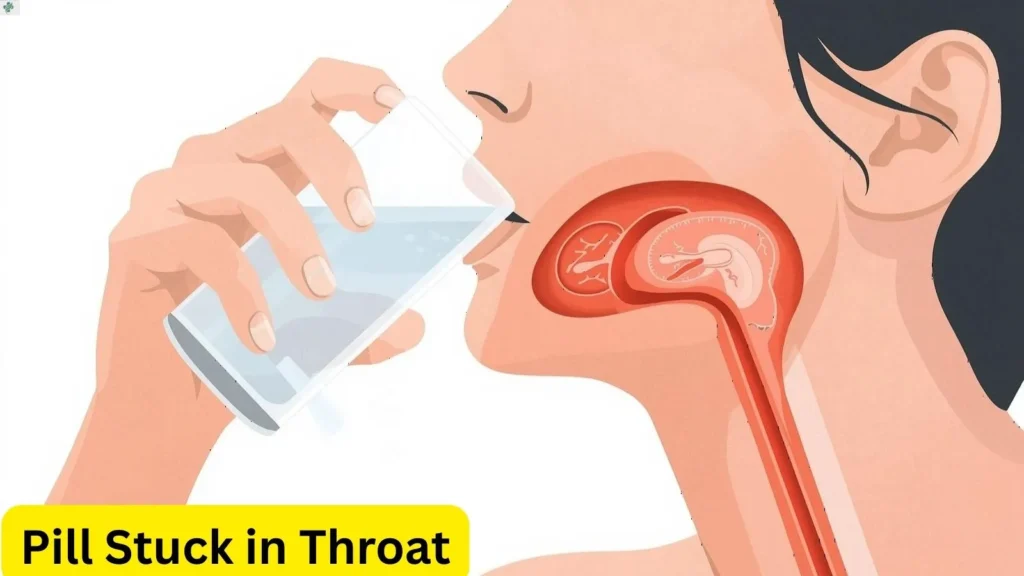
Swallowing a pill usually takes only seconds. However, sometimes it feels like the tablet refuses to move. That uncomfortable pill stuck in throat sensation can cause panic quickly. Many people suddenly cough, drink water repeatedly, or worry about choking.
Although the feeling is common, it can be confusing. Sometimes the pill is actually stuck. In other cases, the throat simply feels irritated. Either way, the discomfort may last minutes or even hours.
|RELATED: is upper back pain a sign of cancer
What Is Pill Stuck in Throat?
A pill stuck in throat describes the sensation that a tablet or capsule has lodged in the throat after swallowing. In medical discussions, this problem may be linked to bold terms such as esophageal irritation, pill-induced esophagitis, or difficulty swallowing (dysphagia).
Common symptoms include:
- A feeling of something stuck in throat
- Mild pain when swallowing
- Chest discomfort behind the breastbone
- Persistent coughing
- Irritation or burning in the throat
- Trouble swallowing food temporarily
Usually, the sensation fades once the pill reaches the stomach. However, if irritation develops, symptoms can continue for several hours.
How Is Pill Stuck in Throat Made?
A pill stuck in throats sensation happens because of how pills travel through the esophagus, the tube connecting the mouth to the stomach.
Normally, swallowing pushes the pill downward through muscle movement called peristalsis. Water also helps the pill slide smoothly. However, certain conditions may interrupt this process.
The sensation may be caused by:
- Swallowing pills without enough water
- Taking medication while lying down
- Dry mouth or reduced saliva production
- Large tablets or sticky capsules
- Slow movement in the esophageal tract
Sometimes the pill dissolves before reaching the stomach. When this happens, the medication may irritate the throat lining. Consequently, inflammation may develop.
Is Pill Stuck in Throat Safe? (Scientific Perspective)
Most cases of a pill stuck in throat are harmless. In fact, the pill usually reaches the stomach within minutes. Nevertheless, doctors warn that repeated irritation can cause complications.
Scientific studies on pill-induced esophagitis show that certain medications may irritate the esophagus if they dissolve too early.
Examples include:
- Antibiotics like doxycycline
- Pain relievers such as aspirin
- Potassium supplements
- Iron tablets
- Some osteoporosis medications
If these pills remain in contact with the throat lining, inflammation may occur. Over time, small ulcers can form in rare cases.
Therefore, safe swallowing habits are strongly recommended. Fortunately, most discomfort resolves naturally.
Why Is Pill Stuck in Throat Used in Food?
Unlike food ingredients, a pill stuck in throat is not something intentionally used in food. Instead, the sensation may occur when supplements or medications are taken before or after eating.
Certain food situations may influence swallowing comfort:
- Dry foods reduce saliva production
- Very hot drinks may irritate the throat
- Large bites may slow swallowing
However, drinking water with medication improves swallowing significantly. Many healthcare professionals recommend taking pills with meals unless instructions say otherwise.
Nutritional Value of Pill Stuck in Throat
A pill stuck in throats does not have nutritional value. However, the tablets or supplements involved may contain vitamins or minerals.
Below is a simplified example.
| Supplement Type | Common Nutrient | Purpose |
|---|---|---|
| Vitamin tablets | Vitamin C, Vitamin D | Supports immune health |
| Mineral pills | Iron, Calcium | Maintains bone and blood health |
| Multivitamins | Mixed nutrients | General health support |
| Electrolyte tablets | Magnesium, potassium | Hydration and muscle function |
Although supplements provide nutrients, swallowing safety remains important.
Benefits of Pill Stuck in Throat
While the sensation itself offers no benefit, it often acts as an important warning signal.
It reminds people to improve medication habits. Consequently, safer swallowing techniques are adopted.
Key lessons include:
- Drinking more water with medication
- Sitting upright while swallowing pills
- Choosing smaller tablets when possible
- Using pill-swallowing techniques
Furthermore, awareness prevents throat irritation and improves comfort.
Risks and Side Effects
Although usually harmless, a pill stuck in throat sensation can sometimes lead to complications.
Possible risks include:
- Throat irritation
- Esophageal inflammation
- Mild ulcers in rare cases
- Difficulty swallowing temporarily
- Persistent throat discomfort
Warning signs that require medical help include:
- Severe chest pain
- Trouble breathing
- Continuous vomiting
- Blood in saliva
- Pain lasting longer than two days
If these symptoms appear, a healthcare provider should evaluate the situation promptly.
Pill Stuck in Throat and Diabetes
For people with diabetes, swallowing medication correctly is especially important. Many individuals take multiple pills daily.
Frequent medication increases the chances of swallowing difficulty or throat irritation.
To reduce risk:
- Take pills with a full glass of water
- Avoid swallowing medication while lying down
- Wait at least 10–15 minutes before sleeping
These steps help medications move smoothly into the stomach.
Pill Stuck in Throat and Weight Loss
The sensation of a pill stuck in throat is not related directly to weight loss. However, individuals using diet supplements, fat-burning pills, or fiber tablets may experience it more often.
This happens because:
- Many supplements are large capsules
- Some expand quickly with moisture
- Others may stick to the throat lining
Therefore, drinking enough water becomes even more important when taking these products.
Pill Stuck in Throat and Gut Health
While the throat and stomach belong to the digestive system, a pill stuck in throat mainly affects the upper digestive tract.
However, improper swallowing habits may delay medication reaching the stomach. This delay may influence drug absorption slightly.
Good swallowing habits support both throat comfort and digestive health.
Helpful tips include:
- Drinking at least 200–250 ml of water with pills
- Sitting upright during swallowing
- Avoiding dry swallowing
These practices help the medication reach the stomach safely.
When Should You Avoid It?
Certain situations increase the risk of a pill stuck in throat sensation. Avoid risky habits when taking medication.
Common triggers include:
- Swallowing pills before sleep
- Taking medicine without water
- Using very large tablets
- Having dry mouth conditions
- Lying down immediately after medication
People with acid reflux, GERD, or swallowing disorders should be extra cautious.
In those cases, doctors may recommend liquid medications instead.
FAQs About Pill Stuck in Throat
Why does a pill feel stuck in my throat even after swallowing?
Often the pill has already reached the stomach. However, throat irritation creates the lingering sensation.
How long can the pill stuck feeling last?
Most discomfort fades within 30 minutes. Mild irritation may last several hours.
What should I do if a pill gets stuck?
Drink a full glass of water. Eating soft food like bread or banana may help push the pill down.
Can a pill dissolve in the throat?
Yes. Some medications dissolve early and irritate the esophagus lining.
Is a pill stuck in throat dangerous?
Usually it is harmless. However, persistent pain should be evaluated by a doctor.
Does drinking water prevent pills from sticking?
Yes. Water helps the tablet slide smoothly through the esophagus.
Should I lie down after taking medicine?
No. It is recommended to stay upright for at least 10–15 minutes.
Summary
A pill stuck in throat sensation can feel alarming, yet it is usually harmless. In most cases, the pill reaches the stomach quickly. The lingering discomfort often comes from throat irritation rather than actual blockage.
However, repeated irritation may lead to esophageal inflammation or mild injury. Therefore, proper swallowing habits are essential.
Simple strategies reduce risk significantly:
- Drink plenty of water with medication
- Remain upright after swallowing
- Avoid taking pills before bedtime
- Consider smaller tablets or liquid forms
Medical Disclaimer
This article is for educational purposes only. It does not replace professional medical advice, diagnosis, or treatment. Always consult a qualified healthcare professional for concerns about medication use or swallowing difficulties.

Emily Roberts focuses on nutrition and natural remedies. She shares useful health information to promote better living.