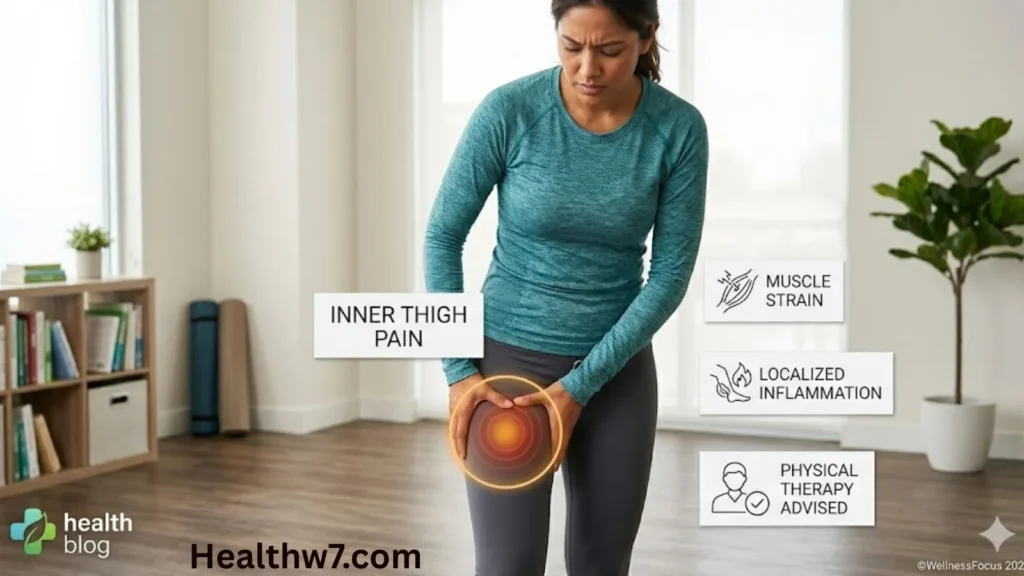
A sharp ache while walking? A pulling feeling after exercise? Or soreness that appears for no clear reason? Inner thigh pain can happen suddenly or build slowly over time. It may feel mild and annoying, or strong enough to affect daily movement.
This pain often starts in the muscles, tendons, joints, nerves, or nearby areas like the groin or hip. Because many body parts connect in this region, finding the true cause matters. The good news is that many cases improve with rest, stretching, and proper care.
In this guide, you’ll learn what inner thigh pain is, why it happens, how to treat it, and when to seek medical help.
What is Inner Thigh Pain?
Inner thigh pain refers to discomfort felt along the inside part of the upper leg. This area includes muscles called the adductors, which help bring your legs together and support balance while walking, running, or changing direction.
Pain may feel like:
- Sharp or stabbing
- Dull aching
- Burning
- Tightness
- Pulling sensation
- Cramping
- Tenderness when touched
Sometimes the pain stays in one spot. However, it may also spread to the groin, hip, knee, or lower back.
How Does Inner Thigh Pain Work?
Pain happens when tissues in the inner thigh become irritated, strained, inflamed, or injured. Here is the process step-by-step:
1. Stress or Injury Starts
This may happen from exercise, overuse, poor posture, dehydration, or trauma.
2. Tissue Becomes Inflamed
Muscles, tendons, or nerves react with swelling and sensitivity.
3. Movement Triggers Pain
Walking, standing, climbing stairs, or stretching may worsen symptoms.
4. Body Tries to Protect Itself
You may limp, avoid movement, or tighten nearby muscles.
5. Recovery or Ongoing Problem
With care, symptoms often improve. Without treatment, pain may continue.
Common Causes of Inner Thigh Pain
Many conditions can lead to inner thigh pain. Some are minor, while others need medical attention.
Muscle Strain
This is one of the most common causes. It often happens during sports, sudden movement, or overstretching.
Signs:
- Sudden sharp pain
- Swelling
- Bruising
- Trouble walking
Groin Strain
The groin and inner thigh muscles work closely together. A groin pull can feel like pain deeper in the inner thigh.
Overuse Injury
Repeated running, cycling, or heavy workouts may irritate muscles and tendons.
Hip Problems
Hip arthritis, labral tears, or poor hip movement can send pain into the thigh.
Nerve Compression
A pinched nerve in the back or pelvis may cause burning or tingling pain.
Hernia
A groin hernia may create pain near the upper inner thigh, especially when lifting.
Blood Clot (Rare but Serious)
A deep vein clot can cause swelling, warmth, and pain in the leg. This needs urgent care.
Key Features of Inner Thigh Pain
- Location-specific discomfort
Pain is mainly felt inside the thigh. - Movement-related symptoms
Walking, stretching, or exercise may trigger pain. - Different pain types
Can feel sharp, dull, burning, or tight. - May involve nearby areas
Groin, knee, hip, or lower back may also hurt. - Ranges from mild to severe
Some cases heal quickly, others need treatment.
Symptoms That May Come With Inner Thigh Pain
You may notice:
- Stiffness
- Swelling
- Bruising
- Muscle weakness
- Cramping
- Limping
- Reduced range of motion
- Tingling or numbness
- Pain during exercise
Meanwhile, fever, severe swelling, or sudden inability to walk needs fast medical help.
Benefits of Understanding Inner Thigh Pain
Knowing the cause of inner thigh pain helps you recover faster and avoid future injury.
Faster Treatment
For example, a strain may improve with rest, while nerve pain needs different care.
Prevents Bigger Problems
Ignoring pain can worsen tears or joint issues.
Better Exercise Choices
You can switch to safer movements during healing.
Less Stress
Understanding symptoms reduces worry and confusion.
Real-World Applications
Athletes
Football, soccer, runners, and dancers often deal with groin and thigh strain.
Office Workers
Long sitting may tighten hips and inner thigh muscles.
Older Adults
Arthritis or balance issues can create thigh discomfort.
Gym Users
Heavy leg workouts or poor form may lead to soreness or strain.
Pregnant Women
Body changes and pelvic pressure sometimes cause inner thigh discomfort.
Advantages and Disadvantages
| Advantages of Early Care | Disadvantages of Ignoring Pain |
|---|---|
| Faster healing | Longer recovery |
| Less swelling | Worsening strain |
| Better mobility | Limping or weakness |
| Lower chance of repeat injury | Chronic pain |
| Improved exercise return | Missed serious causes |
Inner Thigh Pain vs Groin Pain
Many people confuse these two problems.
| Inner Thigh Pain | Groin Pain |
|---|---|
| Felt along inside leg | Felt where thigh meets pelvis |
| Often muscle strain | Hernia or groin strain common |
| Worse with squeezing legs | Worse with lifting or twisting |
| May spread to knee | May spread to abdomen |
Sometimes both happen together because the muscles connect closely.
Future of Inner Thigh Pain Treatment
Treatment is improving every year. New trends include:
Better Physical Therapy
Customized rehab plans target strength and movement patterns.
Wearable Technology
Devices can track walking style and muscle load.
Telehealth Support
Patients can speak with therapists from home.
Faster Recovery Methods
Guided mobility work and modern rehab tools help people return sooner.
Common Problems and Solutions of inner thigh pain
Problem: Pain after running
Solution: Rest for 48 hours, ice the area, and reduce mileage.
Problem: Tight inner thighs
Solution: Gentle stretching and hip mobility exercises.
Problem: Pain while walking
Solution: Avoid heavy activity and seek medical review.
Problem: Repeated strains
Solution: Strengthen hips, core, and adductor muscles.
Problem: Sudden swelling and warmth
Solution: Seek urgent medical care immediately.
Problem: Pain during squats
Solution: Check form, reduce weight, and improve warm-up.
How to Relieve Inner Thigh Pain at Home
If pain is mild, try these steps:
Rest
Reduce sports or heavy movement for a few days.
Ice
Use an ice pack for 15–20 minutes several times daily.
Compression
A thigh sleeve may help swelling.
Elevation
Raise the leg when resting.
Gentle Stretching
Only after sharp pain settles.
Hydration
Drink water to reduce cramps.
Pain Relief
Over-the-counter medication may help if safe for you.
Best Stretches and Exercises
Always stop if pain worsens.
Butterfly Stretch
Sit with feet together and knees apart.
Side Lunges
Improve flexibility and strength gently.
Adductor Squeeze
Place a pillow between knees and squeeze lightly.
Glute Bridges
Strengthen hips and reduce strain on thighs.
When to See a Doctor
Seek medical help if you have:
- Severe or sudden inner thigh pain
- Swelling or bruising
- Trouble walking
- Fever
- Numbness
- Pain lasting more than 1–2 weeks
- Pain after a fall or injury
- Redness or warmth in the leg
These signs may point to a bigger problem.
FAQs About inner thigh pain
What causes pain in the inner thigh?
Inner thigh pains is often caused by muscle strain, overuse, cramps, groin injury, or hip and nerve problems.
How to reduce inner thigh pains?
Rest the leg, apply ice, do gentle stretching, and avoid heavy activity until pain improves.
How to stop inner thigh cramps?
Stretch the muscle, massage the area, drink water, and improve potassium or magnesium intake if needed.
What is the inner thigh area?
The inner thigh is the inside part of the upper leg between the groin and knee, containing adductor muscles.
Is inner thigh pain a blood clot?
Sometimes, yes. If pain comes with swelling, redness, warmth, or shortness of breath, seek urgent medical help.
What vitamin deficiency causes leg pain?
Low vitamin D, B12, magnesium, or potassium can sometimes cause leg pain or cramps.
Is walking good for inner thigh pains?
Light walking may help mild stiffness, but rest is better if pain is sharp or caused by injury.
Can stress cause thigh pain?
Yes, stress can tighten muscles and increase body tension, which may lead to thigh pain.
How to relieve thigh pain?
Use rest, ice or heat, gentle movement, stretching, and pain relief medicine if safe for you.
Conclusion
Inner thigh pain is common and often linked to muscle strain, overuse, or movement problems. However, it can also come from the hip, groin, nerves, or other medical issues. That is why paying attention to symptoms matters.
Most mild cases improve with rest, ice, stretching, and smart activity changes. Still, severe pain, swelling, or ongoing symptoms should be checked by a healthcare professional. With the right care, most people return to normal movement quickly and safely.

Daniel Carter writes about fitness and healthy living. His goal is to help readers improve their health with simple and effective habits.