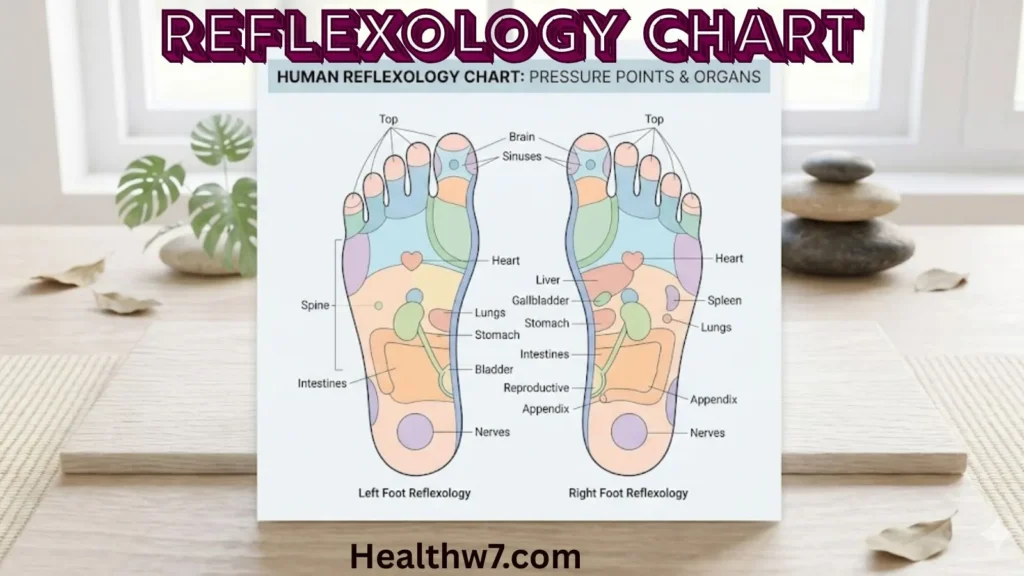
A reflexology chart is a visual map that shows how different areas of your feet, hands, or ears connect to organs and systems in your body. In simple words, it helps you understand where to apply pressure to support overall wellness.
Imagine coming home after a long, tiring day. Your feet ache, and your body feels heavy. You gently press certain spots on your feet and start feeling relaxed. That’s the idea behind reflexology. The chart acts like a guide, showing which points may help relieve stress, improve circulation, and support healing naturally.
Today, reflexology charts are widely used in wellness practices. They are popular because they are easy to understand, non-invasive, and can be used at home or by professionals.
|Related: Maltodextrin: Benefits, Risks & Safety Guide
Benefits of Reflexology Chart
Using a reflexology chart can bring several benefits. While results may vary, many people report noticeable improvements.
1. Helps Reduce Stress
Firstly, reflexology promotes deep relaxation. By pressing specific points, your body may release tension and calm the mind.
2. Improves Blood Circulation
Additionally, applying pressure can stimulate better blood flow. This helps deliver oxygen and nutrients throughout the body.
3. Supports Pain Relief
Many people use reflexology charts to target pain areas. For example, pressing foot points linked to the back may reduce discomfort.
4. Enhances Overall Wellness
Moreover, reflexology encourages balance in the body. It may support digestion, sleep, and energy levels.
5. Easy Self-Care Tool
Most importantly, reflexology charts are simple to follow. You can use them at home without special equipment.
Risks and Side Effects of Reflexology Chart
Although reflexology is generally safe, there are a few things to consider.
Possible Risks
- Mild soreness after pressure
- Temporary fatigue
- Sensitivity in certain areas
Who Should Be Careful
However, some people should consult a doctor before using reflexology:
- Pregnant women
- People with foot injuries or infections
- Those with serious medical conditions
Therefore, it’s always better to use gentle pressure and listen to your body.
Procedure or How It Works
Understanding how a reflexology chart works is simple when broken into steps.
Step 1: Identify the Area
First, look at the chart. Each section of the foot or hand represents a body part. For example:
- Toes → head and brain
- Arch → stomach and organs
- Heel → lower back
Step 2: Apply Pressure
Next, use your thumb or fingers to press the area. Apply firm but gentle pressure.
Step 3: Use Circular Movements
Then, move your fingers in small circles. This helps stimulate the reflex point.
Step 4: Repeat and Relax
Finally, spend 1–2 minutes on each area. Breathe slowly and relax during the process.
As a result, your body may feel lighter and more balanced.
Does Reflexology Chart Hurt or Cause Discomfort?
In most cases, reflexology does not hurt. Instead, it feels relaxing and soothing.
However, some areas may feel tender. This usually means that the corresponding body part needs attention. The discomfort is typically mild and temporary.
If the pressure feels too strong, you should reduce it. Comfort is key for effective results.
How Long Do Results Last?
The effects of reflexology vary from person to person.
Short-Term Effects
- Immediate relaxation
- Reduced tension
- Better mood
Long-Term Benefits
With regular use, you may notice:
- Improved sleep
- Reduced stress levels
- Better overall health
Consistency matters. Therefore, practicing reflexology a few times a week can bring better results.
Cost of Reflexology Chart
The cost depends on how you use reflexology.
At-Home Use
- Reflexology charts (printed or digital): Free to $10
- Tools (rollers, balls): $5–$30
Professional Sessions
- Basic session: $20–$50
- Advanced therapy: $50–$100+
Prices vary based on location, experience, and session length.
How to Find a Qualified Provider or Professional
If you prefer professional help, choosing the right expert is important.
Tips to Choose the Best Practitioner
- Look for certification in reflexology
- Check reviews and ratings
- Ask about experience
- Ensure a clean and comfortable environment
Additionally, a good practitioner will explain the process clearly and make you feel at ease.
Alternatives to Reflexology Chart
While reflexology is helpful, there are other options available.
1. Acupressure
Similar to reflexology but focuses on pressure points across the whole body.
2. Massage Therapy
Helps relax muscles and improve circulation.
3. Aromatherapy
Uses essential oils to promote relaxation and healing.
4. Yoga and Stretching
Improves flexibility and reduces stress naturally.
5. Foot Spa Devices
Provide relaxation through heat, vibration, and water therapy.
Each option offers unique benefits, so you can choose what suits you best.
FAQs
1. What is a reflexology chart used for?
It helps identify pressure points on the feet, hands, or ears linked to different body parts.
|See also: Cappuccino vs Latte: Which Coffee Is Healthier?
2. Can I use a reflexology chart at home?
Yes, it is easy to use and suitable for beginners.
3. How often should I use reflexology?
You can practice it 2–4 times a week for best results.
4. Is reflexology scientifically proven?
Some studies support its benefits, but more research is needed.
5. Can reflexology cure diseases?
No, it supports wellness but does not replace medical treatment.
6. Which part of the foot is most important?
All parts are important, but the arch is commonly used for organ-related points.
7. Is reflexology safe for everyone?
It is generally safe, but people with health conditions should consult a doctor first.
Final Takeaway
A reflexology chart is a simple yet powerful tool for natural wellness. It helps you understand your body better and supports relaxation, pain relief, and balance. Whether you use it at home or visit a professional, it can be a valuable addition to your self-care routine.

Michael Anderson is a health content writer covering general wellness topics. He aims to make health information simple and easy to understand.