Have you glanced in the mirror and noticed the roof of mouth is yellowish? That unexpected color can feel alarming. In many cases, the change stems from something harmless, such as food stains or dry mouth. However, it may also point to an infection or another underlying condition that deserves attention.
A healthy palate usually appears pink and smooth. When the roof of mouth is yellowish, your body may be sending an important signal. Understanding the possible causes helps you decide whether simple home care will solve the problem or whether a dental or medical visit is needed. This guide explains the causes, symptoms, diagnosis, treatments, and prevention tips using clear, research-based information.
RELATED: Natural Remedy for Cracked Heels: Simple Ways to Heal Dry Feet
What Is Roof of Mouth Is Yellowish?
A roof of mouth is yellowish describes a change in the color of the hard or soft palate. Instead of its normal pink shade, the tissue develops a yellow or cream-colored appearance. Sometimes the color change covers the entire palate. In other cases, only small patches become noticeable.
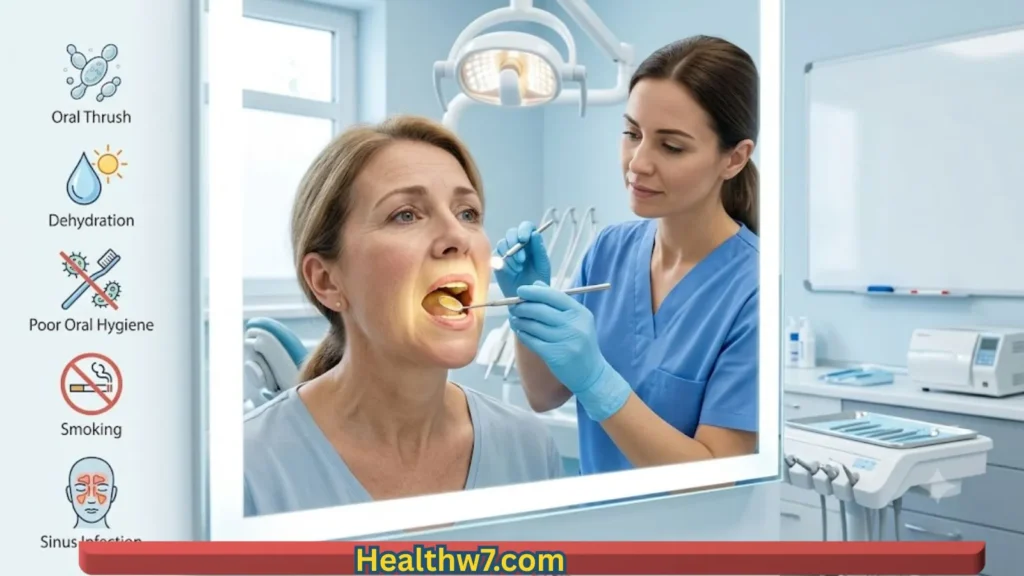
The discoloration may appear because of oral thrush, dry mouth, food pigments, smoking, or a buildup of dead skin cells. For example, someone recovering from a cold may develop a dry mouth overnight. The palate then looks pale yellow until proper hydration returns. While many cases remain mild, persistent discoloration should never be ignored.
How Does the Roof of Mouth Become Yellowish?
Temporary Causes
Several everyday habits can make the roof of mouth is yellowish without indicating serious illness.
- Drinking coffee or tea frequently
- Eating strongly colored foods
- Smoking or vaping
- Poor oral hygiene
- Mild dehydration
These situations often improve after brushing, rinsing, and staying hydrated.
Medical Causes
Sometimes a yellow palate develops because of an underlying condition.
- Oral candidiasis (thrush) caused by yeast overgrowth
- Respiratory infections producing thick mucus
- Sinus infections that drain into the throat
- Vitamin deficiencies
- Certain medications causing dry mouth
- Rare liver disorders leading to jaundice
Think of your mouth as a window into your health. When the body’s balance changes, the palate often reflects those changes before other symptoms become obvious.
Is Roof of Mouth Is Yellowish Safe?
Scientific Perspective
Most cases where the roof of mouth is yellowish are not emergencies. Temporary staining, dehydration, or mild irritation often resolves within a few days after improving oral hygiene and fluid intake.
Healthcare professionals become more concerned when yellow discoloration appears alongside symptoms such as:
- Pain or burning
- White patches that scrape off
- Fever
- Difficulty swallowing
- Persistent sores
- Yellow skin or eyes
Scientific studies show that Candida albicans, the fungus responsible for oral thrush, commonly affects people with weakened immunity, diabetes, recent antibiotic use, or denture wearers. Early diagnosis usually leads to successful treatment with antifungal medication.
A yellow palate lasting longer than two weeks should be evaluated by a healthcare professional to identify the exact cause before complications develop.
See also: Black and White Cookie Nutrition: Calories, Ingredients, Benefits
Benefits of Early Diagnosis and Treatment
Finding the cause of a roof of mouth is yellowish early often prevents bigger problems. Quick treatment can ease discomfort and reduce the chance of complications. For example, treating oral thrush before it spreads helps restore normal tissue faster. Likewise, correcting dry mouth improves comfort and lowers the risk of tooth decay.
Early care may also uncover hidden conditions such as vitamin deficiencies, diabetes, or liver disease. A dentist or doctor can recommend the right treatment based on your symptoms. Think of it like repairing a small roof leak before it damages the entire house. Prompt action usually saves time, money, and unnecessary worry.
Risks and Side Effects
Ignoring a roof of mouth is yellowish may allow an underlying problem to worsen. While harmless staining often fades quickly, persistent discoloration deserves attention. Some conditions progress slowly while others require medical treatment.
Possible risks include:
- Untreated oral infections
- Worsening dry mouth
- Pain while eating or drinking
- Bad breath that continues
- Difficulty swallowing
- Spread of fungal infection
- Delayed diagnosis of serious illnesses
Watch for warning signs such as bleeding, swelling, fever, or sores that fail to heal. These symptoms should be assessed by a healthcare provider.
Roof of Mouth Is Yellowish and Diabetes
People with diabetes may notice a roof of mouth is yellowish more often than others. High blood sugar encourages yeast growth, making oral candidiasis more likely. Diabetes can also reduce saliva production, creating a dry environment where germs multiply easily.
Keeping blood sugar within the recommended range supports better oral health. Regular brushing, flossing, and dental checkups also lower the risk of mouth infections. If yellow discoloration returns repeatedly, speak with your doctor because it may signal that diabetes needs better control.
Roof of Mouth Is Yellowish and Weight Loss
A roof of mouth is yellowish does not directly cause weight loss. However, the condition behind it sometimes can. Mouth infections or painful sores may make chewing uncomfortable, causing some people to eat less than usual.
If unexpected weight loss occurs alongside persistent yellow discoloration, seek medical advice. A healthcare professional can determine whether an infection, nutritional deficiency, or another medical condition requires treatment.
Roof of Mouth Is Yellowish and Gut Health
Your digestive system and oral health share a close connection. An unhealthy balance of gut bacteria may influence the microbes living inside the mouth. After a course of antibiotics, beneficial bacteria can decrease, allowing Candida yeast to grow and produce a roof of mouth is yellowish.
Eating a balanced diet rich in fiber, fruits, vegetables, and fermented foods may help support both gut and oral health. Good hydration also encourages healthy saliva production, which naturally cleans the mouth and limits harmful microorganisms.
part3
When Should You Avoid Self-Treatment?
A roof of mouth is yellowish does not always require medicine. However, self-treatment is not appropriate when serious symptoms appear. Waiting too long may delay the correct diagnosis and allow the underlying condition to worsen.
Seek medical or dental care if you notice:
- Yellow discoloration lasting more than two weeks
- Severe pain or a burning sensation
- Thick white or yellow patches that spread
- Fever or swollen lymph nodes
- Difficulty swallowing or breathing
- Bleeding, ulcers, or unexplained lumps
- Yellow skin or eyes, which may suggest jaundice
- Repeated episodes despite good oral hygiene
Children, older adults, pregnant women, and people with weakened immune systems should seek professional advice sooner because infections can progress more quickly.
Alternatives to Treat the Cause of a Roof of Mouth Is Yellowish
The best treatment depends on the underlying cause rather than the color itself. Once a healthcare provider identifies the reason, recovery usually becomes straightforward.
| Cause | Possible Treatment |
|---|---|
| Oral thrush | Prescription antifungal medication |
| Dry mouth | Drink more water, sugar-free gum, saliva substitutes |
| Poor oral hygiene | Brush twice daily, floss, use an antiseptic mouthwash |
| Smoking | Quit smoking and avoid tobacco products |
| Dehydration | Increase water and electrolyte intake |
| Vitamin deficiency | Eat nutrient-rich foods or take supplements if recommended |
| Medication side effects | Discuss alternative medicines with your healthcare provider |
| Sinus infection | Treat the infection under medical guidance |
Simple lifestyle changes often improve mild cases. Nevertheless, persistent symptoms should always be evaluated by a healthcare professional.
Frequently Asked Questions
Can a roof of mouth is yellowish go away on its own?
Yes. If food stains, dehydration, or mild irritation caused the color change, it often disappears within a few days after improving oral hygiene and hydration.
Is a yellow roof of the mouth always oral thrush?
No. Although oral thrush is a common cause, smoking, dry mouth, sinus infections, poor oral hygiene, and food stains may also create a yellow appearance.
Can dehydration make the roof of my mouth yellow?
Yes. Reduced saliva allows bacteria and dead cells to build up, making the palate look yellowish until hydration improves.
Should I worry if my roof of mouth is yellowish but does not hurt?
Not always. A painless yellow palate may result from harmless causes. However, if the discoloration lasts longer than two weeks or worsens, arrange a dental or medical examination.
Can smoking cause a yellow roof of the mouth?
Yes. Tobacco smoke stains oral tissues, reduces saliva, and increases the risk of infections that may change the palate’s color.
When should I see a dentist or doctor?
Seek professional care if the discoloration persists, spreads, becomes painful, or appears with fever, difficulty swallowing, bleeding, or yellow eyes.
Final Takeaway
Seeing that the roof of mouth is yellowish can feel unsettling, yet many cases have simple explanations such as dehydration, smoking, food stains, or poor oral hygiene. Others may signal oral thrush, vitamin deficiencies, sinus infections, or less common medical conditions that require prompt attention.
Good brushing habits, regular hydration, and routine dental visits help keep your mouth healthy. If the yellow color lasts longer than two weeks, returns repeatedly, or appears with pain, swelling, fever, or yellowing of the eyes, consult a healthcare professional. Early diagnosis often leads to faster treatment and better long-term oral health.
Medical Disclaimer
This article is for educational purposes only and should not replace professional medical advice, diagnosis, or treatment. Always consult a qualified dentist, physician, or other healthcare provider if you have persistent symptoms, severe pain, fever, difficulty swallowing, or any concerns about your oral or overall health. Never ignore professional medical advice because of information you have read online.

Emily Roberts focuses on nutrition and natural remedies. She shares useful health information to promote better living.