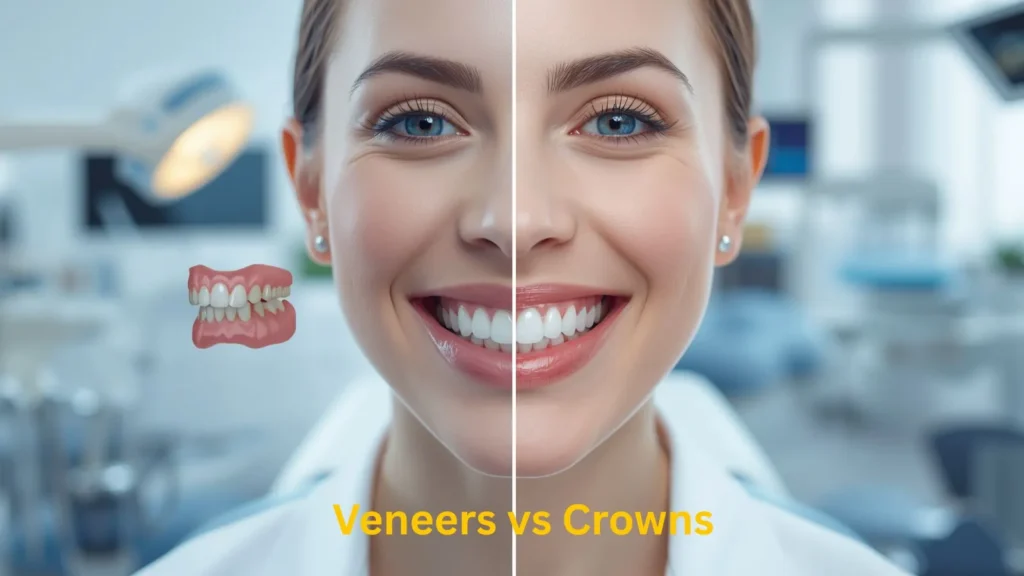
Choosing between veneers and crowns can feel confusing, especially when both treatments improve your smile. However, they work in different ways and solve different dental problems. Veneers mainly enhance appearance, while crowns protect and restore damaged teeth. Understanding the difference helps you choose the right option for your oral health, budget, and long-term goals.
Whether you want a brighter smile or need to repair weak teeth, this guide explains everything in simple language.
RELATED: Clammy Skin: Causes, Symptoms, and Health Perspective
Benefits of Veneers vs Crowns
Both veneers and crowns offer cosmetic and functional improvements. Still, each treatment has unique advantages.
Benefits of Veneers
Veneers are thin shells placed on the front of teeth. Dentists usually make them from porcelain or composite resin.
Natural-Looking Smile
Porcelain veneers closely resemble natural enamel. As a result, they create a bright and smooth smile without looking fake.
Minimal Tooth Removal
Dentists remove only a small amount of enamel before placing veneers. Therefore, the procedure is less invasive than crowns.
Stain Resistance
Porcelain veneers resist coffee, tea, and wine stains better than natural teeth. Consequently, your smile stays white longer.
Quick Cosmetic Fix
Veneers improve:
- Chipped teeth
- Minor gaps
- Uneven shapes
- Mild discoloration
Benefits of Crowns
Crowns cover the entire tooth instead of only the front surface.
Stronger Tooth Protection
Crowns protect weak or cracked teeth from further damage. Because of this, they are often used after root canals or large fillings.
Improved Function
Crowns restore chewing ability and tooth strength. In addition, they help damaged teeth last longer.
Long-Term Durability
Many crowns last 10–15 years or even longer with proper care.
Better for Severe Damage
Unlike veneers, crowns work well for teeth with:
- Large cavities
- Deep cracks
- Heavy wear
- Major structural damage
Risks and Side Effects of Veneers vs Crowns
Although both treatments are generally safe, they still carry some risks.
Veneer Risks
Tooth Sensitivity
Some patients notice temporary sensitivity to hot or cold foods after enamel removal.
Possible Damage
Veneers can chip or crack if you bite hard objects or grind your teeth frequently.
Irreversible Procedure
Since enamel removal is permanent, veneers cannot be undone completely.
Crown Risks
Increased Sensitivity
Crowns may cause gum irritation or temporary discomfort after placement.
Crown Loosening
Over time, cement holding the crown may weaken. Consequently, the crown could become loose.
Tooth Decay Under the Crown
Poor oral hygiene may lead to decay around the crown edges.
Procedure: How Veneers and Crowns Work
The process differs slightly between these treatments.
How Veneers Work
Step 1: Dental Consultation
The dentist examines your teeth and discusses your smile goals.
Step 2: Enamel Removal
A thin layer of enamel is removed from the front of the teeth.
Step 3: Impressions
The dentist takes molds or digital scans to create custom veneers.
Step 4: Veneer Placement
Once ready, the veneers are bonded permanently using dental cement.
How Crowns Work
Step 1: Tooth Examination
The dentist checks whether the tooth can support a crown.
Step 2: Tooth Shaping
More enamel is removed compared to veneers because the crown covers the whole tooth.
Step 3: Temporary Crown
A temporary crown protects the tooth while the permanent one is made.
Step 4: Final Crown Placement
The custom crown is cemented into place during the second visit.
Does Veneers vs Crowns Hurt or Cause Discomfort?
Most people experience very little pain during either procedure because dentists use local anesthesia.
Veneers Discomfort Level
Veneers usually cause mild soreness or sensitivity for a few days. However, most patients return to normal activities quickly.
Crowns Discomfort Level
Crowns may involve slightly more discomfort because more tooth structure is removed. Even so, pain is usually manageable with over-the-counter medicine.
Patients who receive crowns after root canals often feel minimal discomfort afterward.
How Long Do Veneers and Crowns Last?
Longevity depends on oral hygiene, eating habits, and material quality.
Veneers Lifespan
- Porcelain veneers: 10–15 years
- Composite veneers: 5–7 years
Avoiding nail biting and hard foods can extend their lifespan.
Crowns Lifespan
- Porcelain crowns: 10–15 years
- Metal crowns: 15–20 years or longer
Regular dental checkups help crowns last longer.
Cost of Veneers vs Crowns
Prices vary depending on location, dentist experience, and materials used.
Veneer Cost
- Composite veneers: $250–$1,500 per tooth
- Porcelain veneers: $900–$2,500 per tooth
Cosmetic insurance coverage is usually limited.
Crown Cost
- Porcelain crowns: $800–$3,000 per tooth
- Metal crowns: $800–$2,500 per tooth
Dental insurance may partially cover crowns when medically necessary.
What Affects the Cost?
Several factors influence pricing:
- Dentist expertise
- Clinic location
- Material quality
- Number of teeth treated
- Additional dental work needed
How to Find a Qualified Dental Professional
Choosing an experienced dentist improves both safety and results.
Check Credentials
Look for licensed cosmetic or restorative dentists with proper certifications.
Read Reviews
Patient reviews often reveal details about treatment quality and customer care.
Ask About Experience
A skilled provider should show before-and-after photos of previous work.
Discuss Materials
High-quality porcelain usually offers better durability and appearance.
Compare Consultations
Meeting multiple dentists helps you compare prices and treatment plans.
Alternatives to Veneers and Crowns
Some people may prefer other cosmetic or restorative options.
Dental Bonding
Bonding repairs small chips and gaps using tooth-colored resin.
Teeth Whitening
Professional whitening improves discoloration without altering tooth structure.
Invisalign
Clear aligners straighten crooked teeth without veneers or crowns.
Dental Implants
Implants replace missing teeth completely and provide long-term stability.
Orthodontics
Braces improve alignment issues that veneers cannot fix permanently.
Veneers vs Crowns: Which One Should You Choose?
The right treatment depends on your dental condition.
Choose veneers if you want:
- Cosmetic improvements
- Whiter teeth
- Small shape corrections
- Minimal tooth damage treatment
Choose crowns if you need:
- Tooth protection
- Structural support
- Restoration after decay or cracks
- Stronger chewing function
Your dentist can recommend the best solution after examining your teeth.
FAQs About Veneers vs Crowns
Are veneers better than crowns?
Not always. Veneers work best for cosmetic improvements, whereas crowns are better for damaged or weak teeth.
Do crowns look natural?
Yes. Modern porcelain crowns closely match the color and shape of natural teeth.
Can veneers fall off?
Although rare, veneers can loosen if bonding weakens or teeth grinding occurs.
Which lasts longer: veneers or crowns?
Crowns usually last longer because they cover and protect the entire tooth.
Are veneers cheaper than crowns?
Sometimes. Composite veneers may cost less, but porcelain veneers can be similar in price to crowns.
Can crowns and veneers stain?
Porcelain materials resist stains well. However, poor oral hygiene may still affect appearance over time.
Do dental insurance plans cover veneers or crowns?
Insurance often covers crowns when medically necessary. Veneers are usually considered cosmetic and may not be covered.
Final Takeaway
Veneers and crowns both improve smiles, yet they serve different purposes. Veneers focus mainly on appearance, while crowns restore strength and protect damaged teeth. Although veneers require less enamel removal, crowns provide greater durability for weakened teeth. Therefore, your ideal choice depends on your dental health, cosmetic goals, and budget.
Speaking with a qualified dentist is the best way to determine which treatment fits your needs.

Sarah Mitchell is a wellness writer specializing in healthy lifestyle and mental well-being. She provides easy health tips to support daily wellness.